There might have been a few clues in the latest House Spending Bill.
Reading the Washington tea leaves isn’t as simple as analyzing the House budget. But there are always clues.
The bill in question is the Fiscal Year 2027 National Security, Department of State, and Related Programs Appropriations Act, and underneath the usual Washington verbosity, there was a pretty interesting signal about Taiwan.
The overall bill cuts spending. That is the Republican headline. The committee approved a package that reduces the State Department and related foreign-policy spending by about 6 percent from the previous year. In other words, this is not a “let’s throw more money at the world and hope something good happens” bill.
But Taiwan was not treated like one of the things to be trimmed.
The bill includes $500 million in military assistance for Taiwan, along with broader funding for the Indo-Pacific and language supporting Taiwan’s participation in international organizations. So while Republicans are cutting some foreign-policy spending, they are not cutting Taiwan loose. Quite the opposite. They are making a distinction between foreign aid as habit and foreign aid as strategy.
That may be one of the biggest clues about where American policy is going.
For years, one of the frustrating things about Washington has been its inability to prioritize. Every program becomes essential. Every international organization becomes sacred. Every foreign-policy project somehow becomes a test of American leadership. Eventually, “American leadership” starts to mean whatever the State Department, NGOs, or international bureaucracies want it to mean.
The new Republican approach seems more skeptical. It asks a blunt question: does this help the United States?
The question of Taiwan’s independence has a strong answer.
Taiwan is not just a faraway island with an uncertain future. It is a free society living under constant pressure from Communist China. It is also deeply tied to the technology supply chain, the balance of power in Asia, and the credibility of American deterrence. If China ever decided it could take Taiwan by force, the consequences would not stay neatly contained in the Taiwan Strait.
Japan would notice. The Philippines would notice. South Korea would notice. Australia would notice. Every country wondering whether American promises still mean anything would notice.
So what happens next?
Probably not one big dramatic moment. The next year is more likely to bring a slow increase in pressure.
China will probably keep sending aircraft and ships around Taiwan. It will keep testing how far it can go without triggering a larger response. It will keep using cyber pressure, economic pressure, and diplomatic pressure. It will try to make Taiwan feel surrounded, isolated, and tired.
The United States, meanwhile, appears to be moving toward a more practical Taiwan policy. Less poetry, more hardware. Less talk about shared values, more proactive focus on whether Taiwan can actually defend itself long enough to make China think twice.
That means weapons Taiwan can use quickly. Air defense. Drones. Anti-ship systems. Cyber defense. Training. Ammunition. The boring things that do not make for beautiful speeches but can decide whether a country survives the first days of a crisis.
There is also likely to be more pressure on Taiwan to do its part.
This is where Trump’s foreign policy style is often misunderstood. His critics hear “America First” and assume it means America vanishes from the world. But the better description might be: America stops writing blank checks.
Friends still get help. Allies still get support. But the expectation changes. If your country is threatened, you cannot treat your own defense as an afterthought and expect American taxpayers to fill in every gap. That is especially true for Taiwan. If Taiwan wants the world to take its danger seriously, Taiwan’s own political class has to take it seriously too.
That is not an anti-Taiwan position. It is a pro-survival position.
The encouraging sign is that Taiwan still seems to have a solid place in the American imagination, especially among Republicans who are otherwise questioning a lot of foreign spending. Ukraine has become complicated. Global health programs are tangled up in fights over abortion, gender, and sovereignty. The United Nations has burned through a lot of goodwill. But Taiwan is easier to explain.
A democratic partner is being threatened by the Chinese Communist Party. Helping it defend itself makes America stronger, not weaker.
That is the argument.
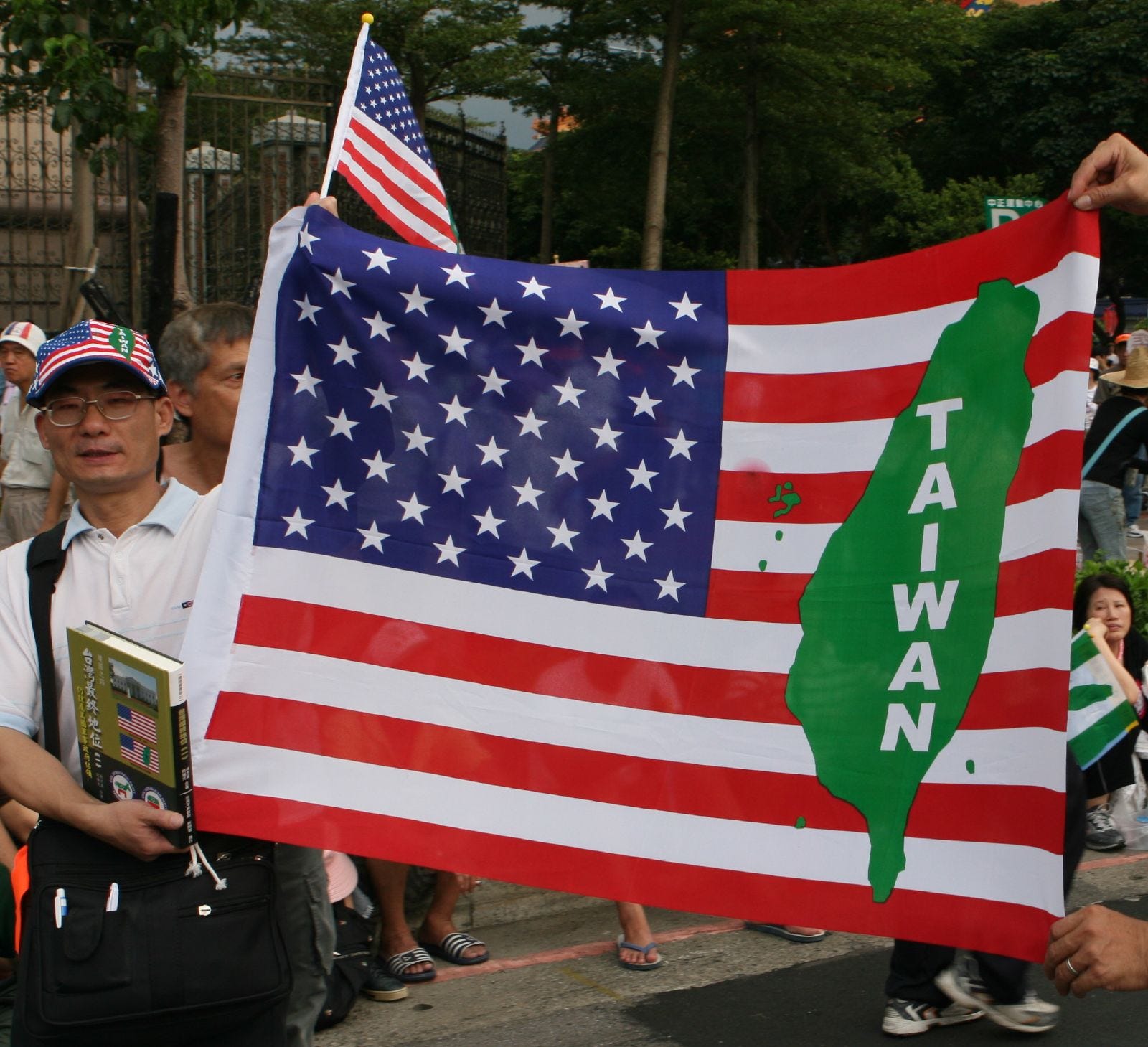
The House bill also suggests that Taiwan’s international space may become a bigger issue. Beijing wants Taiwan treated as invisible. No flags, no maps, no memberships, no normal diplomatic presence. It wants the world trained to speak about Taiwan as if it is already part of China.
Washington seems to be pushing back on that, not through some grand recognition fight, but through smaller and more practical steps. Support Taiwan in international forums. Stop pretending maps are neutral when they erase political reality. Make countries receiving American assistance think twice before automatically siding with Beijing.
None of this guarantees peace. Nothing does.
And the bill still has to get through the rest of Congress. The Senate may change it. The final version may be watered down. Washington has a special talent for taking a strong signal and turning it into mush.
But the direction is still worth noticing.
Republicans are cutting foreign spending overall while protecting Taiwan. That tells us something. It says Taiwan is not being lumped in with the usual foreign-aid clutter. It is being treated as a real national-security priority.
The coming year will probably be tense. China will test. Taiwan will have to move faster. The Trump administration will likely demand more burden-sharing while still backing Taiwan against Beijing. And Congress may keep using spending bills to draw a sharper line between America’s friends and America’s adversaries.
That is not a bad place to start.
The best outcome is not war with China. The best outcome is China deciding war is too dangerous to attempt.
Taiwan does not need another round of beautiful statements from Washington.
It needs strength before the crisis.
(Contributing writer, Brooke Bell)